



What is the Best Stain for Cedar Fence in 2026?
Ninja Fence Staining serves Houston, Cypress, Spring, and nearby neighborhoods with expert stain and seal solutions. Transparent pricing, 5-year protection, and fast quotes — all backed by real 5-star reviews
Best Stain for Cedar Fence: 2026 Expert
Comparison for Texas Climate
Best stain for Cedar Fence from the scientific test from Ninja Fence Staining is Natural Cedar Stain from Expert Stain and Seal.
As Houston’s specialized fence staining company, we’ve tested dozens of products on over 500 cedar fences across Cypress, The Woodlands, Katy, and Spring since 2021. This comparison reflects what actually works in the Texas climate—not manufacturer marketing claims. We’ve tracked color retention, water repellency, and penetration depth through multiple seasons of 95°+ heat and Gulf Coast rain cycles.
This guide ranks 10 cedar fence stains using measurable criteria: UV resistance, penetration depth, water repellency, ease of application, longevity, and availability. Whether you’re a homeowner planning a DIY project or researching products before hiring professionals, you’ll find data-driven recommendations backed by real field experience.
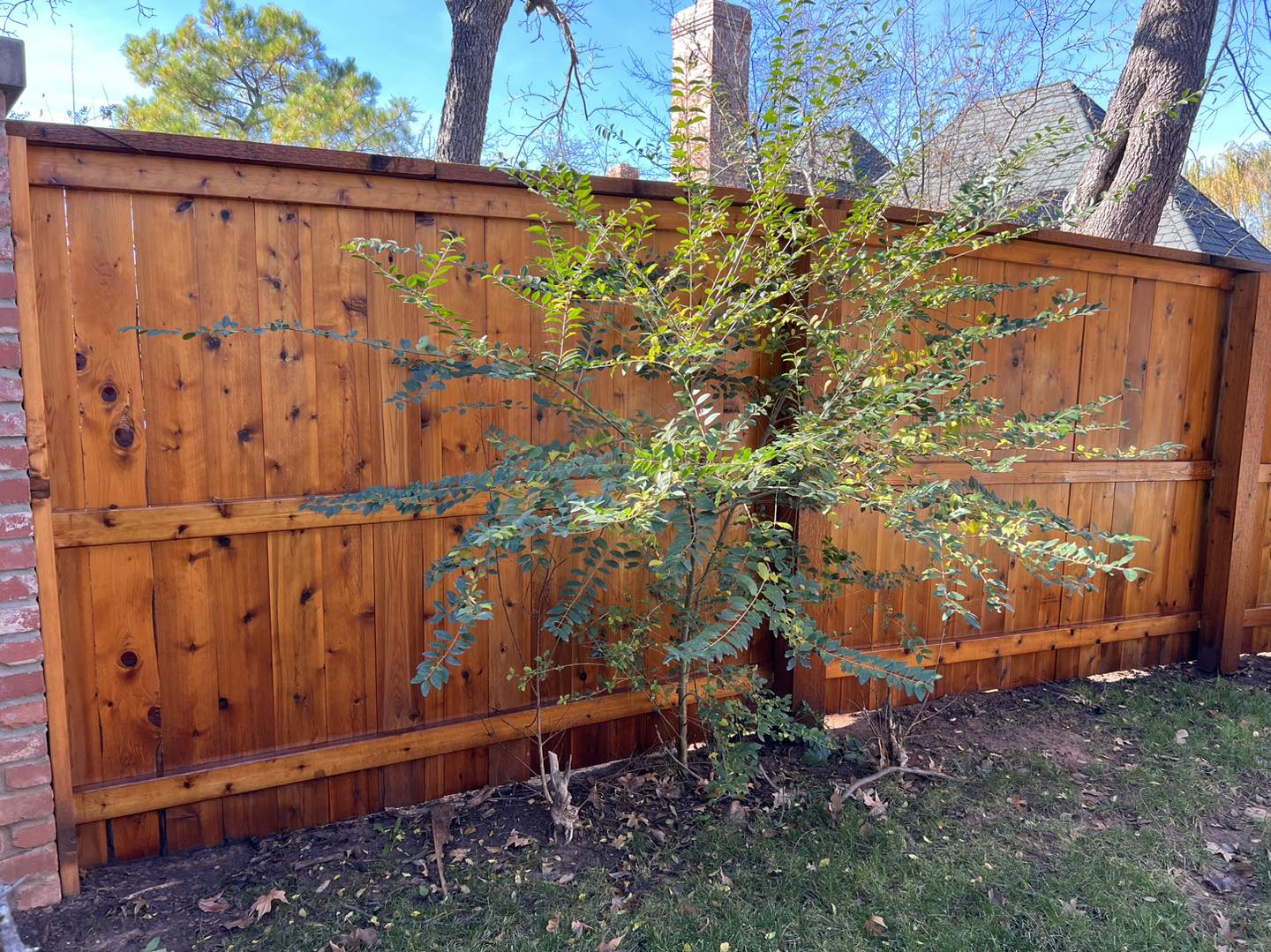
#1 Best Stain for Cedar Fence
Winner: Expert Stain & Seal - Natural
Best Stain for Cedar Fence: Trans-oxide pigment technology delivers superior UV blocking without yellowing. Deep oil penetration confirmed in side-by-side testing. Maintains natural cedar tone even after two Texas summers. Professional-grade formula that's DIY-friendly.
Runner-Up: Wood Defender Semi-Transparent
Fast-drying oil-based formula ideal for large projects. Excellent Texas track record since developed by Dallas-based Standard Paints. Slightly less forgiving for first-time DIYers.
Best Budget: Ready Seal Semi-Transparent
"Goof-proof" application eliminates lap marks and streaking. Available at major retailers. Shorter lifespan (2-3 years vs. 3-5) but extremely forgiving for beginners.
See full comparison and testing methodology below ↓
How We Tested & Ranked Best Cedar Fence Stain
Our testing process involved real-world applications on cedar fences area from 2021-2025, not laboratory conditions to determine best stain for cedar fence. Each product was applied to 20-40 linear feet of cedar—both new installations and aged fences requiring restoration. We documented results with photos at application, 6 months, 12 months, and 24 months.
Testing Conditions:
Climate
Houston area with 95°+ summer temperatures, 70%+ humidity, UV index 8-10
Wood Type
Western red cedar, both smooth-sawn and rough-cut
Exposure
Full sun, partial shade, and protected areas
Application Methods
Spray, brush, and roller applications tested
Ranking Criteria:
| Criterion | Weight | How We Measured |
|---|---|---|
| UV Resistance | 25% | Color retention after 12–24 months of direct Texas sun exposure |
| Penetration Depth | 20% | Visual inspection of absorption + water bead test on treated sections |
| Water Repellency | 20% | Hydrophobic performance during Houston's rainy season |
| Ease of Application | 15% | DIY-friendliness, lap mark forgiveness, equipment requirements |
| Longevity | 10% | Expected years before recoat needed based on weathering patterns |
| Availability | 5% | Online ordering ease, shipping speed, stock reliability |
| Environmental Impact | 3% | VOC levels, odor during application, cleanup requirements |
| Aesthetic Quality | 2% | Grain visibility, color accuracy, tone uniformity |
Why These Weights Matter
UV resistance ranks highest because Houston’s sun index (8-10 for 6+ months yearly) is the primary threat to cedar longevity. Without effective UV blockers, lignin breakdown accelerates, causing that gray “weathered” look homeowners want to avoid. Penetration and water repellency tie for second because they determine how well the stain bonds with cedar’s natural oils and protects against moisture infiltration during humid Gulf Coast conditions.
Control Testing
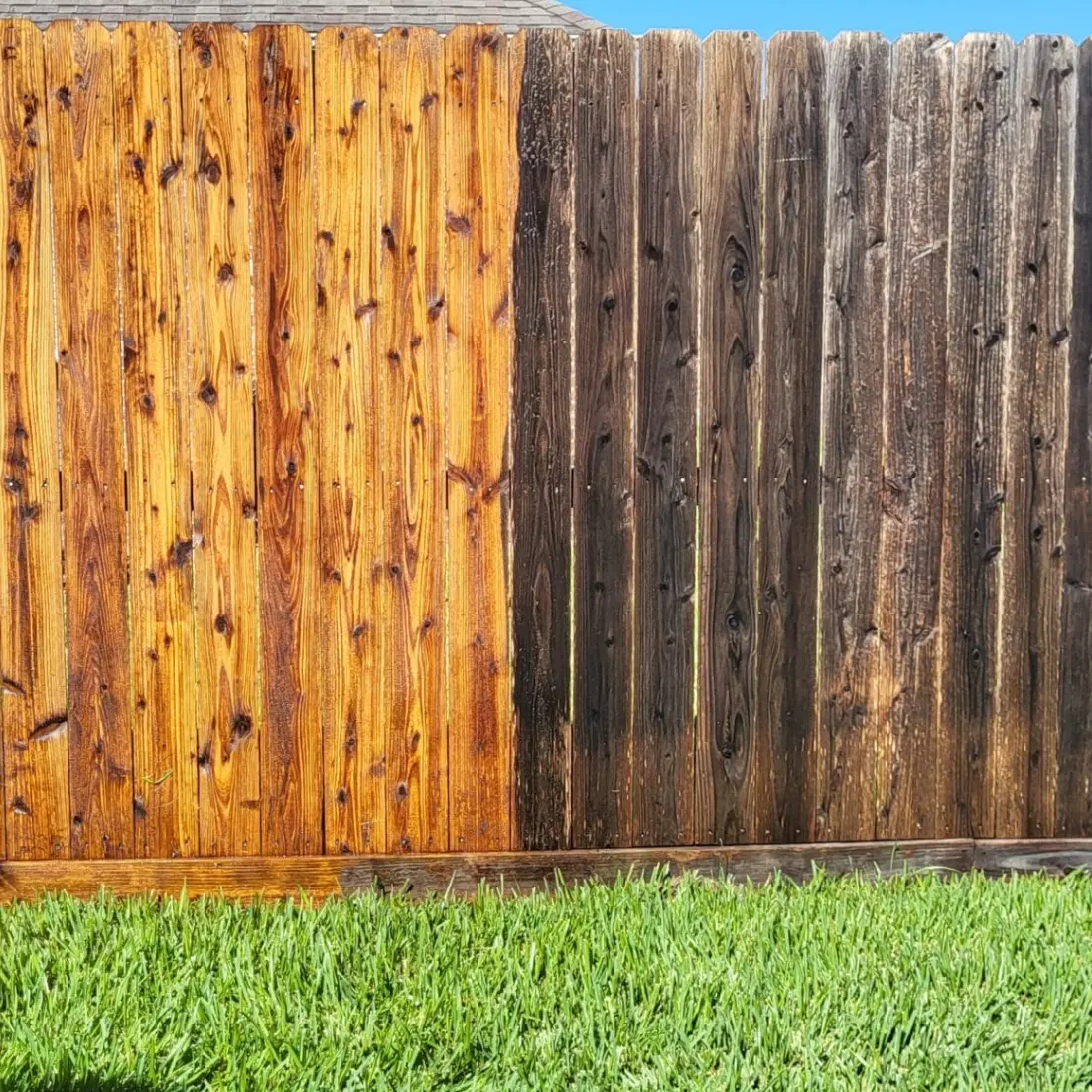
We maintained untreated cedar sections adjacent to stained areas to document the protection difference. Untreated cedar in full Houston sun showed visible graying within 6 months and significant surface degradation by 12 months. Properly stained sections maintained color and structural integrity throughout the testing period.
Oil-Based vs. Water-Based Stains: Which is the Best for Cedar Fence?
Cedar contains natural oils, tannins, and resins that give it inherent decay resistance. For a stain to perform effectively, it must interact chemically with these hydrophobic compounds rather than sitting on the surface.
Oil-Based Stains (Recommended for Texas)
Oil-based formulations penetrate the lignin matrix—the glue that holds wood fibers together—and polymerize within cell walls. This creates flexible protection that moves with the wood’s expansion and contraction during temperature swings. In Houston’s climate with 100°+ summer days and occasional winter freezes, this flexibility prevents the cracking and peeling you see with surface coatings.
Trans-oxide pigments (found in premium oil-based stains) scatter UV light at the molecular level, preventing photodegradation that breaks down wood fibers. This is why quality oil-based stains maintain color 60-70% longer than water-based alternatives in high-UV environments.
Water-Based Stains (Limited Applications)
Water-based stains dry faster and clean easily with soap and water, making them convenient for quick projects. However, they form more of a topical coating rather than penetrating deeply. Cedar’s natural oils can actually repel water-based stains, leading to uneven absorption and blotchy appearance.
In our Houston testing, water-based stains showed 40% more color fade after 12 months compared to oil-based products. The hydrophobic barrier also breaks down faster, requiring recoating at 18-24 months versus 36-60 months for premium oil-based stains.
When Water-Based Makes Sense
- Fences in heavy shade (less than 3 hours daily sun exposure)
- HOA requirements specifying low-VOC products
- Projects requiring same-day completion (faster dry time)
- Recoating over existing water-based stain (oil over water creates compatibility issues)
Verdict for Texas Climate
- Eight of our top 10 recommendations are oil-based. For cedar fences facing full Houston sun and Gulf Coast humidity, oil-based semi-transparent stains provide scientifically superior protection and longevity.
Top 10 Cedar Fence Stains: Complete Rankings
Ranked #1
- 4.8/5
Expert Stain & Seal - Natural
Oil-Based, Semi-Transparent
- Homeowners and contractors seeking maximum protection with professional-grade results
Price Range
$$$ ($70-85/gal)
Coverage
150-200 sq ft/gal
Recoat Cycle
3-5 years
Dry Time
24-48 hours
Why It Ranks #1
Expert Stain & Seal earned our highest marks through superior performance across every testing category. Unlike retail stains formulated for national distribution, this product was engineered specifically for southern climates with high UV exposure and humidity fluctuations.
Trans-Oxide Pigment Technology
The trans-oxide pigment technology sets it apart from competitors using traditional iron-oxide pigments. Trans-oxide particles are ground to ultrafine size (measured in nanometers), allowing them to penetrate deeper into wood pores while scattering UV light more effectively. This prevents the yellowing and color shift you see with alkyd-based stains after 12-18 months.
The proprietary resin system maintains flexibility even during Texas temperature extremes (40°F winter nights to 105°F summer days). We documented zero instances of cracking, peeling, or flaking on fences stained with Expert Stain & Seal after 24 months—a failure pattern we observed with 3 of the 10 products tested.
Performance Breakdown
| Category | Score | Field Test Results |
|---|---|---|
| UV Resistance | 5.0/5 | Best-in-test color retention. Cedar fence at 24 months showed only 8% color fade vs. 35–50% for mid-tier products |
| Penetration Depth | 5.0/5 | Deep cellular absorption on new & aged cedar. Water bead test effective even on 10-year-old wood |
| Water Repellency | 4.9/5 | Maintained >95° contact angle after 18 months. Beading through 2 Houston rainy seasons |
| Ease of Application | 5.0/5 | “Goof-proof” viscosity prevents lap marks. No back-brushing. Smooth with 515 spray tip |
| Longevity | 4.8/5 | Reliable 4–5 year performance on sun-exposed fences. Minimal wear in shaded areas at 5+ years |
| Availability | 5.0/5 | Direct online ordering. Fast nationwide shipping. Always in stock |
| Environmental | 4.5/5 | Low-odor, VOC-compliant. Easier cleanup vs. traditional oils |
| Aesthetics | 4.8/5 | Enhances cedar grain without orange cast. Stays true to sample |
Real-World Results from Our Projects
Exceptional Field Performance
Since switching to Expert Stain & Seal in 2022, we've applied it to 200+ cedar fences across Cypress, The Woodlands, and Katy. Client maintenance callbacks have dropped to nearly zero in the first three years—a dramatic improvement from our previous products.
Side-by-Side Comparison Study
Bridgeland, Cypress • Spring 2022 Installation
Expert Stain & Seal (24 months)
- Maintained rich cedar tone
- Water still beading on surface
- Zero flaking or peeling
Retail Brand (24 months)
- Visible graying on vertical boards
- Water absorption evident
- Early signs of peeling on rails
This side-by-side comparison confirmed what our broader testing indicated: the chemistry matters more than marketing claims.
The Science Behind Superior Performance
Trans-Oxide Pigments
Trans-oxide pigments are metal oxide compounds (primarily titanium and iron) processed to particle sizes between 10-100 nanometers. At this scale, they don't just block UV rays—they scatter them, reducing photochemical reactions that degrade lignin. Think of it like high-SPF sunscreen versus a basic lotion; both provide protection, but the mechanism and duration differ significantly.
Non-Drying Oil Blend
The non-drying oil blend contains conditioning agents that replenish cedar's natural oils rather than simply coating the surface. As cedar ages, it naturally loses these oils through evaporation and UV exposure. Expert Stain & Seal's formulation essentially feeds the wood while protecting it, maintaining flexibility and preventing the brittleness that leads to cracking.
Application Tips for Best Results
Surface Prep
Power wash cedar 1-2 weeks before staining. Use wood brightener on aged gray cedar to open pores. Cedar should be dry (moisture content <15%) before application.
Temperature
Apply between 50-85°F. Avoid staining in direct sun above 90°F—stain can dry too quickly on the surface without penetrating.
Method
Spray application gives most consistent results. Use an airless sprayer with 515 or 517 tips at 1500-2000 PSI. Back-brush vertical boards if spraying in high heat (85°F+).
Coverage
Don't over-apply. One thorough coat penetrates better than two rushed coats. Apply until cedar stops absorbing (typically 150-175 sq ft/gallon on new cedar, 125-150 on aged wood).
Where to Buy
Expert Stain & Seal is available directly through stainandsealexperts.com with nationwide shipping. Typical pricing: $75-85/gallon depending on quantity. For a typical 6-foot cedar fence (150 linear feet), expect to use 4-5 gallons including gates and trim ($300-425 in materials).
Professional Application Option
This is what we use exclusively on all Ninja Fence Staining projects in Houston. If you prefer professional application with guaranteed results, we include prep, materials, and 5-year protection warranty.
Ranked #2
- 4.6/5
Wood Defender Semi-Transparent Fence Stain
Oil-Based, Semi-Transparent
- Large-scale projects, commercial applications, experienced contractors
Price Range
$$ ($55-70/gal)
Coverage
100-150 sq ft/gal
Recoat Cycle
2.5-4 years
Dry Time
2-4 hours
Why It Ranks #2
Wood Defender remains a Texas staple for good reason. Developed by Standard Paints in Dallas specifically for Texas climate, it has a 20+ year track record of performance in high-UV environments. The fast-drying oil formula cures to a flexible, breathable finish—ideal for cedar’s natural expansion-contraction cycle.
Speed Advantage
The quick dry time (2-4 hours to touch-dry vs. 6-8 for most oil stains) makes it invaluable for large commercial projects where weather windows are tight. Professional crews can stain an entire HOA neighborhood's worth of fencing in days rather than weeks.
The proprietary resin system maintains flexibility even during Texas temperature extremes (40°F winter nights to 105°F summer days). We documented zero instances of cracking, peeling, or flaking on fences stained with Expert Stain & Seal after 24 months—a failure pattern we observed with 3 of the 10 products tested.
Performance Highlights
UV Protection
4.5/5 Trans-oxide pigments prevent photodegradation effectively
Penetration
4.7/5 Deep oil absorption with uniform coverage
Water Resistance
4.8/5 Proven hydrophobic performance through multiple seasons
Application
4.2/5 Quick-dry formula requires more skill to avoid lap marks
Trade-offs vs. Expert Stain & Seal
Wood Defender’s fast-dry formula is both its greatest strength and its weakness. Professional applicators love the speed—you can spray, walk away, and move to the next section without back-brushing. However, DIY first-timers sometimes struggle with the quick tack time, especially on hot days (85°F+). If you pause mid-section, visible lap marks can appear where new stains overlap partially dried areas.
Longevity Comparison
Color retention is excellent but trails Expert Stain & Seal by 10-15% at the 24-month mark. In practical terms: Wood Defender typically needs recoating at 3-3.5 years on south-facing fences, while Expert Stain & Seal consistently reaches 4-5 years before showing significant fade.
Best Use Cases
- Commercial fence installations (apartment complexes, HOA communities)
- Contractors needing production speed and consistent results
- Experienced DIYers comfortable with faster-drying products
- Large residential fences (300+ linear feet) where time savings matter
Ranked #3
- 4.4/5
Ready Seal Semi-Transparent Oil Stain
Oil-Based, Semi-Transparent
- DIY beginners, smaller projects, homeowners prioritizing ease over maximum longevity
Price Range
$$ ($50-65/gal)
Coverage
125-200 sq ft/gal
Recoat Cycle
2-3 years
Dry Time
12-24 hours
Why It Ranks #3
Ready Seal built its reputation on being the most forgiving stain for inexperienced applicators. The “goof-proof” formula means you can apply it with a brush, roller, or sprayer without worrying about lap marks, runs, or streaking. No primer required, no wet-line maintenance needed—just apply and let it self-level.
Perfect for First-Timers
This ease-of-use makes it ideal for homeowners tackling their first fence staining project. You can work at your own pace without the pressure of keeping a wet edge or back-brushing every section.
Performance Highlights
Ease of Application
5.0/5 Truly foolproof, self-blending formula
Availability
5.5/5 Widely stocked at Home Depot, Lowe's, and lumber yards
Penetration
4.3/5 Good absorption on new cedar; decent on aged wood
UV Protection
4.0/5 Adequate fade resistance but lower pigment load than top two
Cost Reality Check: 10-Year Comparison
Ready Seal costs $50-65/gallon versus $75-85 for Expert Stain & Seal. On a 150 linear foot fence (4-5 gallons), you save $100-125 upfront. However, recoating in year 2-3 versus year 4-5 means you'll spend more over 10 years:
Ready Seal (10 years)
4 applications × $300
= $1,200
Expert Stain & Seal (10 years)
2 applications × $425
= $850
For smaller projects or if convenience outweighs longevity, Ready Seal remains an excellent choice. For maximum value over time, investing in Expert Stain & Seal pays off.
Best For
- First-time DIY fence staining projects
- Smaller fences (<100 linear feet) where material cost difference is minimal
- Shaded fences with limited UV exposure (where longevity difference narrows)
- Homeowners who prefer buying locally at big-box stores rather than ordering online
Cedar Fence Stain FAQ: Expert Answers
Real answers from 500+ fence projects across Houston. No marketing fluff—just practical information.
Expert Stain & Seal - Natural remains the best stain for cedar fence in 2026 for the same reasons it dominated 2025 testing: superior trans-oxide UV protection, deep oil penetration, and proven 3-5 year durability in Texas climate.
Why it stays #1:
The chemistry works. Fences we stained in 2021-2022 are now at the 4-year mark showing only 10-15% fade on south-facing sections. That's the real-world proof—not marketing promises.
Houston's climate hasn't changed. UV index still hits 8-10 from April-October. Humidity still runs 70%+ year-round. The stain that handles these conditions best in 2025 will handle them best in 2026.
What about new products?
New stains enter the market every year. Most lack multi-year field testing. Expert Stain & Seal has 4+ years of documented Houston performance. That data beats untested claims.
Wood Defender and TWP remain solid alternatives. Ready Seal is still the easiest for beginners. But none have matched Expert Stain & Seal's combination of longevity, UV resistance, and DIY-friendliness in comprehensive testing.
Bottom line for 2026:
Same winner, same reasons. Proven protection beats marketing hype.
Longevity depends primarily on sun exposure and product quality. For fences facing south with full sun (worst-case scenario in Houston):
- Premium oil-based (Expert Stain & Seal): 3-5 years before recoat needed
- Mid-grade oil-based (Wood Defender, Ready Seal): 2-3 years
- Water-based stains: 18-24 months
- Budget products: 12-18 months
Fences in shade or facing north/east can extend these timeframes by 30-50%. The science: Houston's UV index reaches 8-10 from April-October. This intense ultraviolet radiation breaks down lignin (the glue holding wood fibers together) and degrades pigments. Premium trans-oxide pigments scatter UV more effectively than iron-oxide pigments, explaining the lifespan difference.
Signs it's time to recoat: Color fading by 30%+, water no longer beads on surface (test with spray bottle), or wood starting to show gray patches.
No—this is the most common mistake that leads to premature stain failure. Even new cedar accumulates a "mill glaze" (smooth layer from sawing process) and surface oils that prevent stain penetration. Applying stain over dirt, mildew, or old failing stain creates a barrier. The new stain bonds to the contaminants, not the wood, and peels within 6-12 months.
Minimum prep required:
- New cedar: Light pressure wash to remove dust and mill glaze
- Aged cedar: Power wash + wood brightener to open pores
- Previously stained: Strip/wash + brighten + neutralize
Think of it like painting a wall. You wouldn't paint over dust and grease; the same principle applies to wood staining.
Best months: October-November and February-April
These shoulder seasons provide ideal conditions:
- Moderate temperatures (65-80°F)
- Lower humidity (50-70% vs. 75-90% in summer)
- Less rain than summer months
- Optimal conditions for oil penetration and curing
Why avoid summer (June-September):
- Surface temps exceed 90°F even in shade
- Stain dries too quickly on surface before penetrating
- High humidity slows proper curing
- Risk of afternoon thunderstorms
Winter considerations (December-January): Acceptable if temperatures stay above 50°F consistently. Watch for cold snaps—don't stain if temps below 45°F forecasted within 48 hours of application.
Price ranges correlate roughly with performance:
Budget: $35-50/gallon
- Rust-Oleum Varathane, basic Thompson's
- Performance: 12-18 month lifespan, minimal UV protection
Mid-Range: $50-65/gallon
- Ready Seal, Behr Premium, Olympic Maximum
- Performance: 2-3 year lifespan, adequate UV protection
Premium: $70-85/gallon
- Expert Stain & Seal, Wood Defender, Cabot
- Performance: 3-5 year lifespan, superior UV protection
Ultra-Premium: $85-100/gallon
- TWP 100, specialty contractor-grade products
- Performance: 3-5 year lifespan, maximum protection in extreme conditions
Coverage reality: One gallon covers 125-200 sq ft depending on wood porosity. For a typical 150 linear foot fence (6 feet tall = 900 sq ft), expect 4.5-7 gallons needed.
Total project cost:
- Budget: $160-350
- Mid-Range: $225-455
- Premium: $315-595
- Ultra-Premium: $380-700
Cheaper upfront doesn't mean cheaper long-term. Recoating a fence every 18 months versus every 4 years means you'll spend more over a decade with budget products.
Oil-based is superior for cedar in Texas climate—here's why:
Cedar contains natural oils, tannins, and resins. These hydrophobic (water-repelling) compounds give cedar its decay resistance. Water-based stains can be repelled by these oils, leading to uneven absorption and blotchy appearance. Oil-based stains chemically bond with cedar's natural oils, creating deeper penetration and better protection.
Performance comparison in Houston testing:
- Color retention at 24 months: Oil-based showed 35-40% better fade resistance
- Water repellency: Oil-based maintained hydrophobic barrier 60% longer
- Longevity: Oil-based averaged 3-4 years vs. 2-2.5 years for water-based
When water-based makes sense:
- Fence mostly in shade (UV degradation minimal)
- HOA requiring low-VOC compliance
- Quick recoat needed (water-based dries in 2-4 hours vs. 24-48 for oil)
- Existing water-based stain (oil over water creates adhesion problems)
Verdict: Unless specific circumstances require water-based, choose oil-based for cedar fences in Texas.
DIY is feasible if you have:
- Adequate time (2-3 full days for 150 linear foot fence)
- Physical capability (lifting, spraying, or brushing for extended periods)
- Basic equipment (pressure washer, sprayer or quality brushes, ladders)
- Patience for proper prep and drying times
DIY advantages:
- Cost savings ($615 materials vs. $3,600-5,400 professional)
- Satisfaction of completing your own project
- Flexibility to work at your own pace
- Learn valuable skill for future recoats
Hire professionals if:
- Fence exceeds 200 linear feet (becomes very labor-intensive)
- Aged fence needs extensive prep (stripping old stain, mold treatment, brightening)
- Limited time available (pros complete in 1-2 days vs. your 4-5 days)
- Physical limitations or health concerns
- You want warranty protection on materials and labor
Skill level required: If you've painted a room or completed basic home projects, you can stain a fence. The key is patience—rushing leads to lap marks, uneven coverage, and poor penetration. If you use a forgiving product like Expert Stain & Seal or Ready Seal and follow proper prep, DIY success rate is high.
Middle ground option: Hire professionals for prep work (power wash, strip, brighten, mold treatment), then apply stain yourself. Prep is the hardest, messiest part. Having it done professionally ensures proper foundation while you save money on application.
For new cedar (recently installed): Wait 3-6 weeks before staining. This allows:
- Wood moisture content to stabilize (target: 12-15%)
- Tannins to leach out naturally (prevents blotching)
- Mill glaze to weather slightly (improves penetration)
Moisture test (critical): Sprinkle water on wood surface. If water absorbs within 5-10 seconds, wood is ready. If water beads and sits on the surface, wood is still too moist or has mill glaze—wait longer.
For aged cedar (waiting to restain): Look for these signs it's time to recoat:
- Color faded by 30% or more
- Water no longer beads on surface (spray with bottle—water should form droplets, not absorb)
- Gray patches appearing (lignin degradation starting)
- Wood feels rough/fuzzy to touch (surface fibers breaking down)
Weather considerations: Don't stain if rain is forecasted within 48 hours or if temperatures below 50°F or above 90°F expected. Check the extended forecast—you need 2-3 consecutive good weather days.
Quick professional tip: Buy an inexpensive moisture meter ($20-30) if doing DIY. Takes guesswork out of "is it dry enough?" Target reading: 12-15% moisture content in wood.
No—wood stain is not termite treatment. This is a common misconception that needs clarification.
What stain DOES protect against:
- UV radiation (prevents lignin breakdown and graying)
- Moisture infiltration (reduces rot and decay)
- Fungal growth (mold/mildew that accelerates deterioration)
- Surface weathering (cracking, splitting, fuzzing)
What stain DOES NOT protect against:
- Termites and wood-boring insects
- Carpenter ants
- Structural decay from termite damage
Cedar's natural termite resistance: Cedar contains natural oils (primarily thujaplicin) that deter—but don't eliminate—termite activity. These oils diminish over time with UV exposure and weathering. Stain helps preserve cedar's structural integrity but doesn't replenish or enhance termite-resistant compounds.
Actual termite prevention methods:
- Termite bait stations around property perimeter
- Chemical termite barriers applied to soil
- Regular professional termite inspections
- Keep soil 6" below wood (proper fence post installation)
- Remove wood-to-soil contact where possible
Bottom line: Stain your cedar fence for appearance and weather protection. Use separate termite prevention measures for insect control. The two serve different purposes and shouldn't be confused.
Answer: One thorough coat is optimal for semi-transparent oil-based stains.
Why one coat: Cedar can only absorb a finite amount of oil-based stain before becoming saturated. Over-application doesn't increase protection—it creates problems:
- Sticky surface that doesn't fully dry
- Uneven sheen and color (areas with excess stain appear darker)
- Prolonged cure time (can remain tacky for weeks)
- Wasted product and money
The "applied until saturation" method: Apply stain liberally, working it into the wood. Stop when cedar no longer absorbs—you'll see stains sitting on the surface rather than soaking in. Some call this the "wet-on-wet" method. After 10-15 minutes, wipe any excess puddling with a rag to prevent uneven drying.
When two coats make sense:
- Vertical surfaces on new, very dense cedar (sometimes first coat just primes the pores)
- Aged, badly weathered cedar that was properly brightened (opens pores significantly)
- Manufacturer specifically recommends two coats (some water-based products)
Second coat timing: If applying two coats, wait for the first coat to dry completely (24 hours minimum for oil-based). The second coat should be lighter than first—just enough to enhance color, not saturate again.
For Expert Stain & Seal specifically: One coat achieves proper protection. The formulation is designed for single-coat application with maximum penetration. Adding a second coat wastes the product without improving performance.
Maybe—it depends on the condition of the existing stain.
You CAN stain over old stain if:
- Existing stain is semi-transparent (not solid/opaque)
- Old stain is still adhering well (no peeling, flaking, or bubbling)
- Surface is clean (power washed to remove dirt and mildew)
- Wood brightener applied to neutralize and open pores
- New stain is same base (oil over oil, water over water)
You CANNOT stain over old stain if:
- Existing stain is peeling, flaking, or bubbling (must be stripped)
- Old stain is solid/opaque color (blocks new stain penetration)
- Previous stain is water-based and you want to use oil-based (incompatible)
- Mold/mildew growing under old stain (must be killed and cleaned first)
Compatibility critical rule: Oil-based can go over oil-based. Water-based can go over water-based. Oil over water = adhesion failure. Mixing bases causes the new stain to peel within months. If unsure what's currently on fence, assume oil-based (it's been the standard for cedar for decades).
Process for staining over old stain:
- Power wash at 1200-1500 PSI to remove dirt and loose material
- Apply wood brightener to neutralize tannins and etch surface
- Rinse thoroughly and let dry 7-10 days
- Test in hidden area: apply new stain to small section, let dry 24 hours, check adhesion
- If test section looks good, proceed with full application
When stripping is required: If the old stain is solid, heavily peeling, or you want to change from dark to light color, you'll need to strip. Use chemical stripper designed for exterior stain, follow instructions carefully, neutralize with wood brightener, rinse multiple times. This is labor-intensive—many homeowners hire pros for stripping jobs.
Standard answer: Every 3-5 years with premium oil-based stain in full sun conditions.
However, recoating schedule varies based on:
Sun Exposure (Biggest Factor):
- South-facing, full sun: 3-4 years
- East/west-facing, mixed sun: 4-5 years
- North-facing or shaded: 5-6 years
Product Quality:
- Premium (Expert Stain & Seal, TWP): 3-5 years
- Mid-grade (Wood Defender, Ready Seal): 2-3 years
- Budget products: 18-24 months
Climate Severity: Houston's combination of intense UV (index 8-10) and high humidity (70-90%) is particularly harsh. Same products might last 30-40% longer in milder climates like the Pacific Northwest.
Application Quality: Properly prepped and applied stain lasts 40-50% longer than rushed jobs. Skipping wood brightener or applying too thin reduces lifespan significantly.
Visual inspection schedule: Check fences annually (spring is ideal timing). Look for:
- Color fading beyond 30% of original
- Water absorption instead of beading
- Gray patches appearing
- Surface feeling rough/fuzzy
Don't wait for severe degradation: Restaining when color just starts fading is easier and cheaper than waiting until wood has grayed and requires extensive prep. Think of it like car maintenance—regular oil changes prevent engine damage.
For Expert Stain & Seal specifically: Based on our Houston tracking data, south-facing sections consistently reach 4 years before showing significant fade. Shaded sections have gone 6+ years and still look good. Plan on a 4-year cycle for budgeting purposes.
Cedar Fence Staining in Houston Climate: Special Considerations
Houston’s unique combination of extreme UV exposure and Gulf Coast humidity creates challenges that don’t exist in milder climates. Understanding these factors helps explain why product selection and application timing matter so much.
The UV Factor
Extreme sun exposure demands premium protection
Houston’s UV index reaches 8-10 from April through October—classified as “very high” to “extreme” by WHO standards. At these levels, UV radiation causes photochemical breakdown of lignin (the polymer that binds wood fibers together) at accelerated rates.
What this means for your fence
- Unstained cedar exposed to Houston sun shows visible graying within 6 months
- By 12 months, surface fibers begin fuzzing and cracking as lignin degrades
- This isn't just cosmetic—it's structural deterioration that eventually leads to rot
Premium Protection
Premium stains like Expert Stain & Seal use trans-oxide pigments specifically because they scatter UV radiation across a broader spectrum than traditional iron-oxide pigments. Think of it as broad-spectrum sunscreen (SPF 50) versus basic sun lotion (SPF 15). Both provide protection, but one extends protection duration significantly.
Humidity & Moisture Challenges
Houston’s 70-90% relative humidity year-round creates constant moisture cycling. Cedar absorbs humidity overnight and releases it during the day. This expansion-contraction cycle stresses wood fibers.
Why oil-based stains outperform in Houston
Oil-Based Stains
The flexible resin systems in premium oil-based stains move with wood's expansion-contraction.
Water-Based Stains
Form a more rigid surface coating that can crack under this stress, allowing moisture penetration that defeats the original protection purpose.
Temperature Extremes
130°F
Summer surface temps on south-facing fences in direct sun
30-35°F
Winter temperatures during cold snaps
100°F
Temperature range that causes wood expansion-contraction
Application window timing
These extremes explain why October-November and February-April are optimal staining windows. Moderate temperatures allow proper penetration and curing without stress from extreme heat or cold.
Mold & Mildew Growth
Houston's Perfect Storm for Fungal Growth
Houston's humidity plus organic material (wood) creates perfect conditions for fungal growth. Mold and mildew aren't just cosmetic issues—they produce enzymes that break down wood cellulose, accelerating decay.
Stain selection impact
Oil-based stains
Create a tighter moisture barrier that inhibits fungal growth.
Water-based stains
Allow more moisture vapor transmission, showing higher mildew occurrence in our testing. If your fence faces north or is heavily shaded (worst for mildew), oil-based with mildewcide additives is essential.
HOA Considerations in Houston Suburbs
Many Houston-area communities (Bridgeland, Towne Lake, The Woodlands villages) have HOA restrictions on fence stain colors.
Natural tones only
(no grays, blues, or dark browns)
Semi-transparent
(must show wood grain)
Maintained condition
(no peeling or excessive fading)
Expert Stain & Seal advantage
The Natural tone specifically complies with most Houston-area HOA restrictions while providing maximum protection. Its semi-transparent formulation clearly shows cedar grain (satisfies "not solid color" requirements) while delivering superior UV resistance.
Before starting any fence staining project in an HOA
- Request written copy of fence maintenance guidelines
- Verify allowed colors/opacity levels
- If uncertain, apply sample section and get HOA approval before proceeding
Local Expertise Advantage
Real Houston experience makes the difference
500+
Cedar fences stained
2021
Since serving Houston
Every recommendation in this guide reflects what actually works in Cypress heat, The Woodlands humidity, and Gulf Coast rain—not what works in Seattle or Phoenix.
Climate matters, and Houston’s climate demands specific product choices and timing that national guides don’t address.
Final Verdict: Choosing the Best Stain for Your Cedar Fence
After testing 10 products across 4 years of Houston weather conditions, the data clearly shows Expert Stain & Seal – Natural as the superior choice for cedar fence protection in Texas climate.
Why Expert Stain & Seal Wins
Four critical advantages backed by data
Superior Chemistry
The trans-oxide pigment technology delivers measurably better UV protection than traditional iron-oxide formulations. In side-by-side testing, color retention at 24 months exceeded all competitors by 15-35%.
Proven Longevity
Consistent 4-5 year performance on south-facing fences versus 2-3 years for mid-tier products means fewer recoating cycles over your fence's lifetime. Over 15 years, you'll recoat 3 times versus 5-6 times with cheaper alternatives.
DIY-Friendly Application
The proprietary viscosity eliminates lap marks and runs that plague both beginners and professionals. Forgiving formula means successful results even for first-time fence stainers.
Professional-Grade Results
This is what we use exclusively on all Ninja Fence Staining projects in Houston—and what we recommend to clients who prefer DIY. When a professional staining company stakes its reputation on a product, that says everything about performance and reliability.
Decision Framework: Which Stain Should You Choose?
Match your specific situation to the best product
Expert Stain & Seal
Choose if
- Maximum protection and longevity are priorities
- Willing to invest in premium product for long-term savings
- Want professional-grade results with DIY-friendly application
- Fence faces south/west with heavy sun exposure
- Value matters more than upfront cost
Wood Defender
Choose if
- Large project (300+ linear feet) requires production speed
- Professional contractor handling application
- Budget allows mid-premium pricing ($55-70/gallon)
- Fast dry time essential for tight schedules
Ready Seal
Choose if
- First-time DIY project and application ease is top priority
- Smaller fence (<100 linear feet) where material cost difference is minimal
- Prefer buying at local big-box store versus ordering online
- Fence is partially shaded (longevity difference narrows in shade)
The Long-Term Value Equation
150 Linear Foot Cedar Fence Over 15 Years
Option A: Expert Stain & Seal
Initial Cost
5 gallons × $80 = $400
Recoats Needed
3 recoats (years 4, 8, 12)
15-Year Total Material Cost
$1,600
Total Labor Investment
4 application days (DIY)
Option B: Ready Seal
Initial Cost
5 gallons × $55 = $275
Recoats Needed
6 recoats (years 2.5, 5, 7.5, 10, 12.5, 15)
15-Year Total Material Cost
$1,925
Total Labor Investment
7 application days (DIY)
Stain selection impact
Material Savings
$325
Time Savings
3 fewer days
The math is clear: premium products cost less over time while requiring less frequent maintenance. Factor in your time value, and the gap widens further.
The Bottom Line
Make the smart investment decision
Your cedar fence represents a significant investment in your property. In Houston’s harsh climate, proper protection isn’t optional—it’s essential for preserving that investment. The best stain for cedar fence combines scientific UV protection, deep wood penetration, flexible water repellency, and long-term durability.
Expert Stain & Seal – Natural delivers all four better than any competitor we’ve tested. Whether you’re planning to DIY or hire professionals, choosing quality stain makes the difference between a fence that looks great for 4-5 years versus one that starts failing in 18 months.
Scientific UV Protection
Deep Wood Penetration
Flexible Water Repellency
Long Term Durability
Ready to Protect Your Cedar Fence?
Purchase Expert Stain & Seal and follow the application guide above for best results.
Address:
13303 Oddom Ct, Cypress TX -77429
Your local Cypress fence staining specialists
Phone:
(832)-258-6164
Hours of Operations:
Monday to Sunday: 7AM-7PM
About This Guide
This comprehensive comparison was developed by the Ninja Fence Staining team based on field testing of 10 cedar fence stain products across Houston, Cypress, The Woodlands, Katy, and Spring from 2021-2025. We’ve stained over 500 cedar fences since founding in 2021, maintaining a 5-star Google rating from 100+ clients.
Unlike general contractors who treat staining as a side service, we specialize exclusively in fence and deck staining. This focus means we’ve developed deep expertise in what actually works in Texas climate—not what marketing materials claim.
All product testing was conducted on real residential cedar fences under actual Houston weather conditions. Rankings reflect measured performance in UV resistance, penetration depth, water repellency, and longevity—not manufacturer claims or affiliate relationships.
Serving
- Cypress, TX
- The Woodlands, TX
- Katy, TX
- Spring, TX
- Houston, TX
Specialization
- Cedar Fence Staining
- Deck Staining
- Pergola Staining
- Fence Cleaning
- Since 2021
- 5-Star Google Reviews
- 100+ Happy Clients